
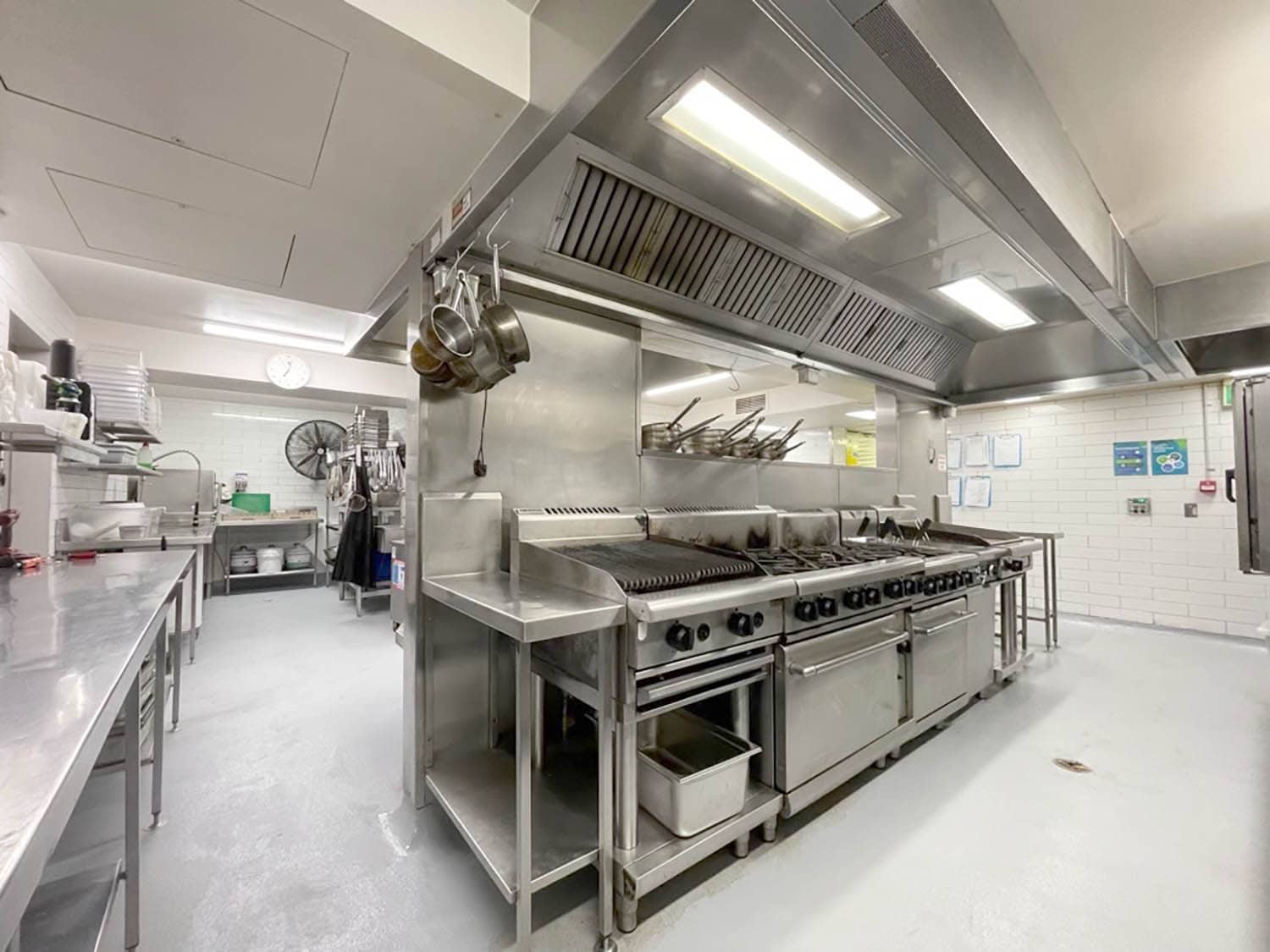
Commercial kitchens operate in high-stress, high-traffic environments where every surface must perform under pressure. Epoxy flooring offers a seamless, long-lasting solution that addresses the most common kitchen flooring concerns: hygiene, durability, safety, and ease of maintenance. Whether it’s a bustling restaurant or a large-scale food processing facility, epoxy flooring provides a dependable foundation that stands up to constant use.
Why Epoxy Is Ideal for Commercial Kitchens
Commercial kitchen epoxy flooring is engineered to endure intense operational demands. These spaces are exposed to frequent spills, heavy foot traffic, rolling equipment, high heat, and chemical cleaning products. Epoxy creates a non-porous, monolithic surface that resists penetration by liquids, grease, or food particles. Its seamless finish prevents dirt and bacteria from settling in joints or cracks, making it easier to keep kitchens sanitary and compliant with health codes. It’s no wonder epoxy commercial kitchen flooring is a top choice for restaurants, hotels, and industrial kitchens alike.
Key Features of Epoxy Flooring for Commercial Kitchens
Commercial kitchens need flooring that performs under pressure—literally and figuratively. These features make epoxy flooring for commercial kitchens a smart investment for maintaining performance and hygiene under pressure. Whether you’re renovating or building from scratch, commercial kitchen flooring epoxy provides a dependable, industry-compliant solution.
- Seamless Surface: Without seams or grout lines, there’s no place for bacteria to hide or for grime to build up.
- Chemical Resistance: Epoxy stands up to acids, oils, bleach, and harsh degreasers commonly used in kitchen sanitation.
- Slip-Resistance: Textured finishes or anti-slip additives improve safety in areas prone to wet or greasy spills.
- Heat Tolerance: High-performance epoxy systems can handle radiant heat from ovens, fryers, and cooking equipment.
- Fast Cleaning: The smooth, non-absorbent surface allows for quick and thorough cleaning between shifts.
Safety & Health Compliance Advantages
Epoxy flooring commercial kitchen systems are designed to meet the highest standards for food safety and workplace health. Their seamless construction helps prevent the growth of mold, mildew, and bacteria in damp or humid conditions. By minimizing slip hazards and reducing contamination risks, epoxy floors support key health regulations, including those aligned with HACCP (Hazard Analysis Critical Control Point) standards. Facilities that prioritize hygiene—like hospitals, schools, and food production plants—can rely on epoxy to help meet inspection requirements and protect their teams.
Design Options for Commercial Epoxy Kitchen Floors
While functionality is the priority, epoxy flooring also offers a range of customizable design options. From texture-enhancing additives to a wide spectrum of finishes, businesses can tailor their floors to fit both operational needs and brand image. These design options allow businesses to maintain both aesthetics and safety without compromise:
- Solid Colors: Neutral tones such as gray, tan, or white create a professional, clean appearance. These colors help maintain a sanitary look and reflect lighting well.
- Flake Additives: Colored flakes can be broadcast into the coating for visual interest and added traction. They also help camouflage minor wear and debris.
- Quartz Sand Blends: Durable and highly slip-resistant, these blends are perfect for wet zones. They’re often recommended for areas near dishwashing stations or walk-in coolers.
- Matte or Satin Finish: Reduces glare and creates a safer working environment. This finish also conceals scuffs and keeps the surface looking clean throughout the day.
Installation Process: What to Expect
Proper installation is critical to ensuring long-term performance and compliance with industry standards. A well-prepared substrate and professional-grade application are key to maximizing durability, safety, and hygiene. Installing commercial kitchen epoxy flooring involves several precise steps:
- Surface Prep: Floors must be cleaned, degreased, and diamond-ground to promote adhesion. Moisture mitigation may be required.
- Primer and Base Coat: An epoxy primer is rolled on, followed by a thicker base coat to form the main barrier.
- Anti-Slip & Topcoat: Aggregates or texture materials are added for grip, then sealed with a durable topcoat.
- Cure Time: Light foot traffic may be allowed within 24–48 hours; full curing typically takes 72 hours. Using fast-cure formulations can accelerate this process for tighter timelines.
- Flexible Scheduling: Installations can be planned during off-hours or downtime to minimize disruption. This flexibility is especially useful for restaurants or facilities with nonstop operations.
Cost of Commercial Kitchen Epoxy Flooring
| Kitchen Size | Cost Range (Installed) | Notes |
| Small prep area (300 sq. ft) | $1,500–$2,700 | Simple solid-color epoxy |
| Medium kitchen (600 sq. ft) | $3,000–$5,400 | Includes anti-slip and topcoat layers |
| Large restaurant (1000+ sq. ft) | $6,000–$10,000+ | High-traffic, multi-zone installation |
Several variables affect the commercial kitchen epoxy flooring cost, including the condition of the existing floor, the number of coats required, the inclusion of slip-resistant aggregates, and whether specialty coatings like antimicrobial or rapid-cure systems are used. While initial costs may be higher than vinyl or tile, the long-term savings in maintenance and durability make epoxy a cost-effective choice.
Epoxy vs Other Commercial Kitchen Flooring Options
| Feature | Epoxy Flooring | Quarry Tile | Vinyl Sheet Flooring |
| Durability | High (10–15 years) | High | Moderate |
| Seamlessness | Yes | No (grout lines) | Seamless |
| Slip Resistance | High (with additives) | Moderate | Moderate |
| Chemical Resistance | Excellent | Good | Poor–Moderate |
| Maintenance | Very Low | Medium | High |
| Install Disruption | Medium | High | Low |
Who Should Consider Commercial Kitchen Epoxy Floors?
For facilities that prepare or serve food, flooring is more than a design decision—it’s a safety and sanitation strategy. Any organization that values safety, sanitation, and long-term value should consider epoxy flooring as a foundational investment. Epoxy is a versatile solution for a range of commercial food prep and service environments:
- Restaurants & Cafés: Ideal for both kitchen areas and visually appealing front-of-house spaces. These settings benefit from epoxy’s clean look and superior sanitation.
- Hotels & Resorts: Supports strict hygiene standards in banquet kitchens and staff service corridors. The seamless surface ensures compliance with food safety protocols.
- Schools & Hospitals: Safe and sanitary for high-volume meal prep and delivery. Epoxy resists moisture, bacteria, and wear from heavy foot traffic and carts.
- Catering Companies & Ghost Kitchens: Durable, efficient surfaces built to withstand constant use. Ideal for spaces that require minimal maintenance and maximum uptime.
Ready to Upgrade Your Kitchen Floors?
Looking to upgrade your commercial kitchen flooring? Contact Epoxy Tallahassee today for a free quote on slip-resistant, food-safe epoxy flooring built to handle the heat of any kitchen. Our team specializes in high-performance coatings designed to meet health codes and reduce downtime. Let us help you create a kitchen floor that’s safe, durable, and easy to maintain.
Frequently Asked Questions
How long does epoxy flooring last in a commercial kitchen?
Typically 10–15 years with proper installation and routine cleaning. High-traffic areas may benefit from occasional topcoat reapplication to extend lifespan.
Can epoxy be applied over old kitchen tiles or concrete?
Yes, with proper surface prep such as grinding or moisture sealing, epoxy can cover various surfaces. A professional evaluation ensures compatibility and long-term performance.
Is epoxy safe for kitchens with hot fryers and ovens?
Yes—quality epoxy systems can tolerate high heat and thermal shock with the right additives. It’s commonly used near cooklines and industrial ovens.
How quickly can a kitchen reopen after epoxy installation?
Most systems allow for light foot traffic in 24–48 hours; full cure may take 72 hours. Fast-cure options are available for quicker turnaround when downtime is limited.
Does epoxy help with kitchen hygiene?
Absolutely. Its seamless, non-porous surface resists bacteria, mold, and grime buildup. This makes daily sanitation faster and helps meet regulatory standards.