
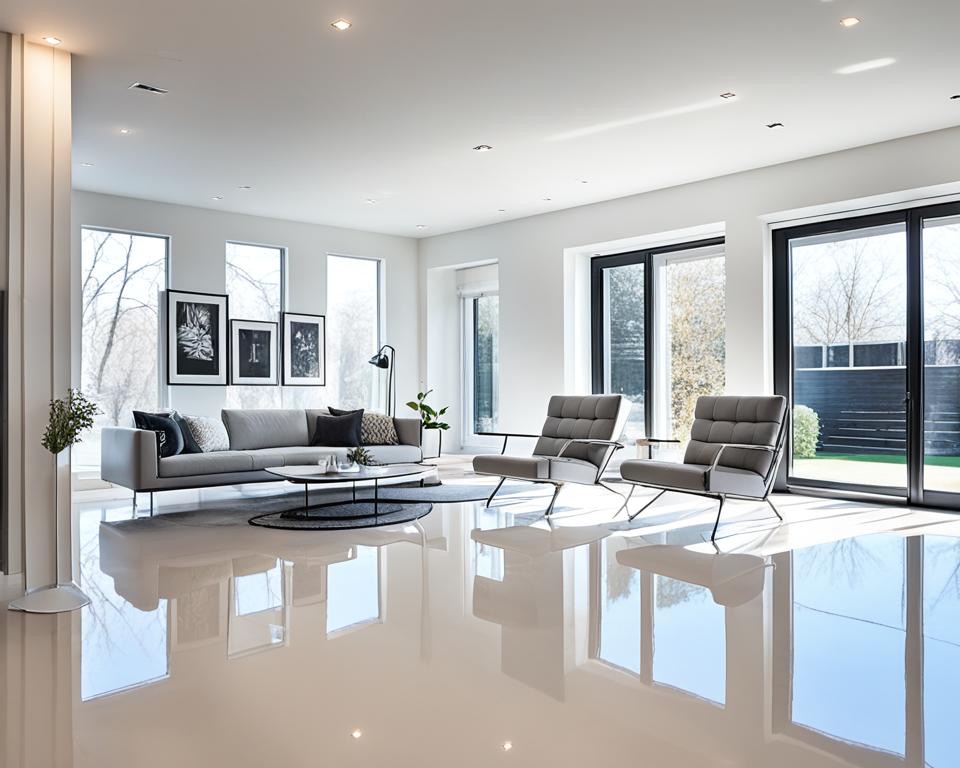
Why Homeowners Are Choosing Epoxy Floors
Epoxy flooring has moved beyond warehouses and showrooms to become one of the most popular options for residential spaces. Its success is part of a larger trend toward innovative floor coatings that blend style with substance. Its sleek aesthetic, seamless design, and long-lasting surface make it ideal for modern homes.
Homeowners are drawn to epoxy because it resists stains, moisture, and abrasion. It’s perfect for garages, basements, kitchens, bathrooms, and even living rooms where durability and design matter. The finish is easy to clean and requires minimal maintenance—ideal for busy households.
Types of Epoxy Flooring for Residential Use
Epoxy flooring is as versatile in design as it is in durability. Homeowners now have access to a variety of epoxy systems that fit different rooms, lifestyles, and design goals. From sleek solid colors to artistic 3D finishes, there’s a solution for every taste and budget.
Solid Color Epoxy
Simple and clean, solid color epoxy is a top choice for garages, workshops, and utility rooms. It’s available in standard shades like gray, white, and tan, providing a crisp, minimalistic foundation.
Epoxy Flake Floors
These floors are designed with color flakes embedded in the top layer for extra texture and style. Epoxy flake systems are ideal for garages and basements thanks to their slip resistance and ability to hide imperfections.
Epoxy Flooring 3D
For a dramatic visual effect, 3D epoxy flooring can feature underwater scenes, marble-like swirls, or custom graphics. It creates a bold, immersive look perfect for game rooms, lounges, or artistic interiors.
Resin Floor Finishes
Resin floors combine epoxy with polyurethane or other blends to achieve unique finishes and textures. These floors are perfect for high-end bathrooms, kitchens, and minimalist living rooms where seamless surfaces enhance the design.
Residential Applications: Where It Works Best
Epoxy flooring adapts well to a variety of home environments, making it one of the most flexible surface solutions for residential properties. Whether you’re protecting high-traffic areas or creating a bold design statement, epoxy performs beautifully in key rooms throughout the house.
Garage
Epoxy garage floors resist hot tire pickup, oil stains, chemical spills, and abrasion. Compared to garage floor paint epoxy, they last longer and maintain their finish under frequent use.
Basement
In moisture-prone spaces like basements, epoxy acts as a protective sealant against mold and water damage. It also adds a polished, modern look that can make a basement feel like a true extension of the home.
Kitchen & Living Spaces
With design-forward options like 3D and resin finishes, epoxy can become a statement piece in kitchens, entryways, and even living rooms. It blends visual appeal with functional benefits like easy cleaning and stain resistance.
Benefits of Epoxy Flooring in Homes
- Durable: Resists heavy traffic, pet claws, furniture, and impact. It’s built to withstand years of wear in active households.
- Moisture-Resistant: Great for basements, bathrooms, and humid climates like Florida. Prevents mold growth and protects against spills and leaks.
- Low Maintenance: No waxing required—just mop or sweep. Occasional mild detergent is all that’s needed for a spotless look.
- Customizable: Choose from colors, patterns, textures, and effects like metallic or flake. Match your personal style or home’s decor.
- Eco-Friendly: No harsh cleaners needed, and fewer replacements mean less waste. A longer lifespan reduces environmental impact over time.
Installation Process for Residential Epoxy Floors
- Surface Preparation: The concrete is cleaned, dried, and mechanically ground to create a clean surface. Moisture testing is also performed. Proper preparation ensures strong adhesion and prevents delamination.
- Primer and Base Coat: A bonding primer is applied, followed by a base coat in your chosen color. This layer helps unify the surface and supports decorative finishes.
- Design Additions: Optional flakes, metallic pigments, or 3D images are embedded in the coating. These elements enhance both aesthetics and traction.
- Topcoat Application: A clear, UV-resistant topcoat seals the surface for lasting protection and gloss. It also adds chemical resistance and improves surface longevity.
Installation typically takes 2–5 days, depending on square footage and custom design elements.
Epoxy vs Other Residential Flooring Options
| Feature | Epoxy Flooring | Tile Flooring | Laminate Flooring |
| Durability | High (10–20 yrs) | Medium | Low–Medium |
| Moisture Resistance | Excellent | Excellent | Poor |
| Aesthetic Options | High (customizable) | Medium (styles only) | Limited (wood looks) |
| Maintenance | Very Low | Moderate | Moderate |
| Cost/Sq. Ft | $4–$9 | $5–$15 | $3–$6 |
Cost of Epoxy Flooring for Homes
When planning a residential epoxy flooring project, it’s important to understand how pricing is determined. Multiple variables—from design complexity to preparation requirements—can affect the final cost per square foot. The cost of epoxy flooring depends on several variables:
- Basic solid color systems typically start around $4 per square foot. These are ideal for utility spaces like garages where functionality meets affordability.
- Flake and metallic systems fall in the range of $6–$9 per square foot. These offer enhanced texture, aesthetics, and durability for mid-range budgets.
- 3D epoxy or intricate resin finishes may cost up to $12 per square foot. These high-end options deliver striking visual effects and premium style.
- Larger installations, such as full basements or whole-home coatings, may qualify for volume pricing. Bundling multiple rooms often reduces material waste and installation time.
Commercial vs. Residential Epoxy Floors
Although commercial and residential epoxy floors share foundational materials, the way they’re formulated and applied varies significantly. Commercial epoxy flooring systems often use reinforced blends that enhance their performance under industrial stress. Understanding these differences can help homeowners and business owners choose the right system for their space:
- Commercial epoxy prioritizes durability, chemical resistance, and safety for high-impact areas. It’s built to endure forklift traffic, frequent cleaning, and harsh industrial conditions.
- Residential epoxy emphasizes aesthetics, texture, and comfort underfoot. It’s designed to be visually appealing while maintaining safety and ease of maintenance.
- The finishes and formulas are often customized to match the space’s use and environment. Residential floors may include satin topcoats or decorative effects, while commercial coatings focus on function and compliance.
Ready to Elevate Your Home with Epoxy?
Want to transform your home with floors that are both functional and stunning? Contact Epoxy Tallahassee today for a free estimate on residential epoxy flooring tailored to your space and style. Our team brings years of expertise and trusted craftsmanship to every project. Let us help you elevate your home’s beauty and performance with a seamless, long-lasting finish.
Frequently Asked Questions
Is epoxy flooring safe for indoor home use?
Yes—modern epoxy systems are low-VOC and safe once cured, making them ideal for indoor residential use. They’re non-toxic and odorless after application, ensuring a healthy home environment.
Can epoxy flooring be used in kitchens or bathrooms?
Absolutely. It’s waterproof, seamless, and easy to clean—great for high-moisture areas. Its resistance to mold and mildew makes it especially suited for bathrooms and utility spaces.
How long does epoxy flooring last in a home?
With proper care, epoxy flooring can last 10 to 20 years in residential settings. Routine cleaning and occasional resealing can help extend its lifespan even further.
What’s the difference between resin and epoxy floors?
Epoxy is a type of resin. Resin floors may also include polyurethane, offering different textures and flex levels. Polyurethane options are often softer underfoot and more UV-resistant.
Can I install epoxy flooring myself?
DIY kits are available, but professional installation ensures better prep, durability, and visual results. Experts also handle moisture testing and proper layering for a longer-lasting finish.