
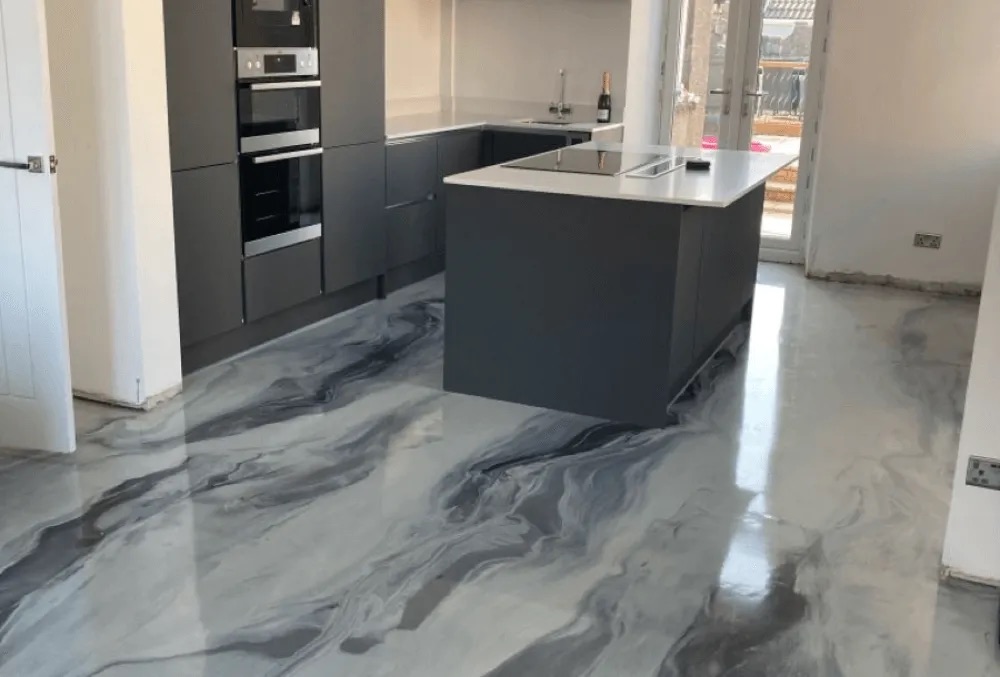
What is Epoxy Flooring?
Epoxy flooring is a high-performance resin-based surface coating applied over concrete substrates. Known for its durability, glossy finish, and exceptional resistance to chemicals, abrasion, and moisture, epoxy has become a go-to choice for both homes and businesses.
This seamless flooring system combines a resin and a hardener to form a rigid plastic material that bonds tightly to the surface. It’s ideal for areas like garages, kitchens, and basements where toughness and easy maintenance are critical. The rising demand for epoxy kitchen floors and garage flooring epoxy installations reflects its growing popularity across residential and commercial settings.
What Influences the Cost of Epoxy Flooring?
Several variables affect how much epoxy flooring costs. First, the condition of the existing concrete floor plays a big role—floors that require extensive cleaning, crack repair, or moisture mitigation will cost more to prepare. Second, square footage influences total pricing, with larger spaces benefiting from economies of scale.
Third, the type of epoxy coating—such as water-based, solvent-based, or 100% solids—affects both durability and price. The more solids in the mixture, the thicker and longer-lasting the coating, but also more expensive. Labor costs vary based on local rates and installation complexity. Intricate designs, metallic finishes, or multi-layer systems will drive up the cost, as will regional pricing differences and the quality of materials used.
Average Cost by Application Type
Epoxy Garage Flooring
Epoxy garage floors are one of the most common applications. The average cost for garage flooring epoxy ranges between $4 to $8 per square foot, depending on surface preparation, coating type, and design. A typical two-car garage of about 400–500 square feet will cost $1,600 to $4,000 in total. Garages often require heavy-duty coatings to withstand tire abrasion, oil spills, and frequent use.
Epoxy Kitchen Floor
Epoxy kitchen floors offer a modern look with high functionality. Installation typically ranges from $6 to $12 per square foot due to the increased prep time around cabinetry and appliances. Kitchens also benefit from slip-resistant additives and food-safe coatings, which can add to the overall price. Total installation cost for an average kitchen (150–200 sq. ft.) falls between $900 and $2,400.
Basement Epoxy Floor Cost
Basements come with unique challenges such as moisture control and crack repairs, which influence pricing. On average, epoxy basement floor cost ranges from $5 to $10 per square foot, depending on the extent of prep work required. For a 1,000 sq. ft. basement, total costs may range from $5,000 to $10,000, especially if vapor barriers or moisture sealers are needed.
Pros and Cons of Epoxy Flooring
Advantages of Epoxy Flooring:
- Highly durable and long-lasting under heavy foot and vehicle traffic, making it perfect for garages and workshops.
- Seamless and non-porous surface resists stains, chemicals, and moisture, helping preserve the floor’s appearance over time.
- Customizable with colors, patterns, flakes, and metallic finishes to match various interior aesthetics and preferences.
- Low maintenance and easy to clean, requiring only periodic mopping to retain its shine and function.
- Enhances brightness due to reflective surface, which can improve visibility and reduce the need for artificial lighting.
Disadvantages of Epoxy Flooring:
- Can be slippery when wet unless treated with anti-slip additives, posing a risk in wet areas if not properly textured.
- Prone to yellowing under prolonged UV exposure, especially in sunlit or outdoor settings without UV-stable coatings.
- Installation requires time (up to 5 days) and proper ventilation, which may interrupt normal usage of the space.
- Strong chemical odors during application, requiring adequate protective gear and airflow for safe installation.
Step-by-Step Epoxy Installation Process
- Surface Preparation: The concrete must be thoroughly cleaned, degreased, and ground to ensure proper adhesion. Cracks and divots are repaired with epoxy filler or patching compound.
- Primer Application: A primer coat improves adhesion and seals the concrete surface. It also helps fill in minor imperfections for a smoother base layer.
- Base Coat: The first layer of epoxy is applied evenly across the surface. This coat forms the foundation for strength and color consistency.
- Decorative Layer (Optional): Flakes, quartz, or metallic pigments can be added for visual texture and slip resistance. This step adds customization and can increase traction.
- Topcoat Sealer: A UV-stable, chemical-resistant topcoat seals the system and enhances durability. It also provides a glossy finish and added protection against wear and tear.
The entire process typically takes 2 to 5 days, depending on room size, drying time, and the number of coats applied.
Cost-Saving Tips for Epoxy Floors
- Choose basic finishes: Solid colors or flake systems are more budget-friendly than metallic or custom patterns.
- Bundle spaces: Coating multiple rooms in one project helps reduce setup and mobilization fees. It also streamlines the scheduling process and may qualify you for bulk material discounts.
- DIY in simple spaces: Garages or utility rooms may be suitable for skilled DIYers using epoxy kits. However, kitchens and basements usually require professional installation due to tight corners, moisture concerns, and higher aesthetic expectations.
Epoxy vs Other Flooring Types
| Feature | Epoxy Flooring | Tile Flooring | Polished Concrete |
| Average Cost/Sq. Ft | $4–$9 | $5–$15 | $3–$12 |
| Durability | High | Medium–High | High |
| Aesthetic Variety | High (custom colors, flakes) | High (varied tiles) | Medium (grey tones) |
| Moisture Resistance | Excellent | Excellent | Good (with sealer) |
| Maintenance | Low | Medium | Low |
| Installation Time | 2–5 days | 3–7 days | 1–2 days |
Is Epoxy Flooring Right for You?
Epoxy flooring is ideal for homeowners who value durability, low maintenance, and a sleek, modern appearance. It performs exceptionally well in garages, kitchens, and basements—areas that demand a tough, moisture-resistant finish.
However, epoxy may not be suitable for everyone. If you prefer soft or cushioned flooring, or if you’re sensitive to chemical odors during installation, alternatives like luxury vinyl or rubber may be a better fit. Still, for high-traffic zones and easy upkeep, epoxy remains a top-tier option.
Get a Free Quote from Epoxy Tallahassee Today
Ready to upgrade your home with beautiful, durable epoxy flooring? Contact Epoxy Tallahassee today for a free estimate and expert guidance tailored to your space and budget. Discover how epoxy can transform your floors into stunning, long-lasting surfaces that stand the test of time.
Frequently Asked Questions
How long does epoxy flooring last?
Epoxy floors typically last 10 to 20 years, depending on the level of traffic, exposure, and how well they’re maintained. High-quality installations in garages or commercial spaces can last even longer.
Can I install epoxy flooring myself?
Yes, DIY epoxy kits are available for simpler spaces like garages. However, for complex areas such as kitchens or basements, hiring a professional ensures a smoother, longer-lasting finish.
Does epoxy flooring add value to my home?
Absolutely. Epoxy flooring enhances the functionality and appearance of high-use areas like garages and basements, which can be a selling point for potential buyers.
Is epoxy flooring safe for homes with pets?
Yes. Epoxy floors are non-toxic once cured and resist scratches from pet claws. Adding a textured finish also prevents slipping.
How do I maintain epoxy flooring?
Regular sweeping and occasional mopping with a gentle cleaner will keep epoxy floors looking new. Avoid abrasive chemicals that could damage the topcoat.